



11
1960
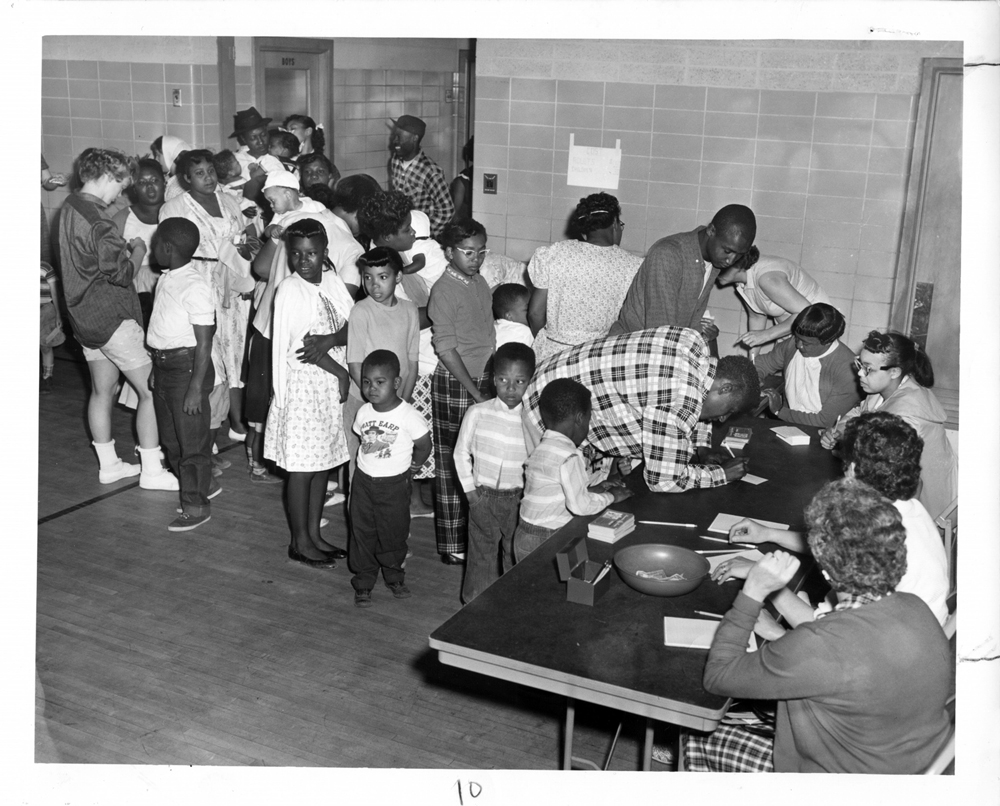
Image: Polio clinic sponsored by the Urban League of Greater Muskegon. Photo credit: Bentley Historical Library / Urban League of Greater Michigan Records.
The Formative Years
1960–1985
The 1960s saw the beginnings of significant changes in the American healthcare system. The period was marked by the rapid expansion of social programs, including the establishment of Medicare and Medicaid in 1965, and the concomitant blossoming of social sciences and federal support for this research. HSR came into greater prominence as a field over the next 50 years, helped by various shifts in healthcare financing that incentivized interdisciplinary research on how healthcare was organized, delivered, and paid for.
1961
Axelrod expands SPH program in Medical Care Organization
SPH Professor S.J. “Sy” Axelrod expands the SPH program in Medical Care Organization, which soon takes on a central role in educating administrators for the Social Security Administration, established by Congress in 1965.
1964
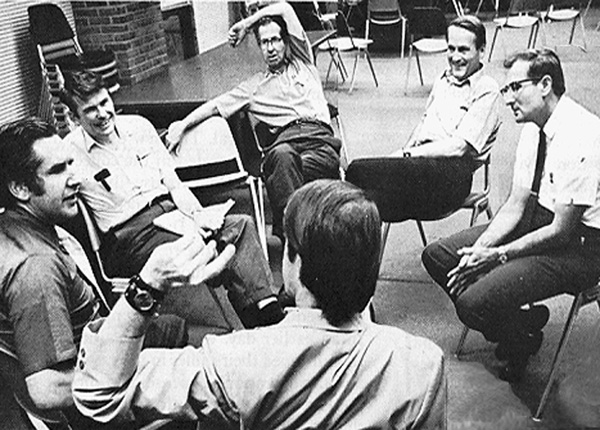
Photo of Ron Lippitt, Flloyd Mann and colleagues. From ISR history http://home.isr.umich.edu/about/history/timeline/
CRUSK begins at ISR
The Center for Research on the Utilization of Scientific Knowledge (CRUSK) is established at ISR; undertakes a variety of HSR and other research until 1985, when its work was largely absorbed into ISR’s three other research centers.
1966
Bentley Historical Library
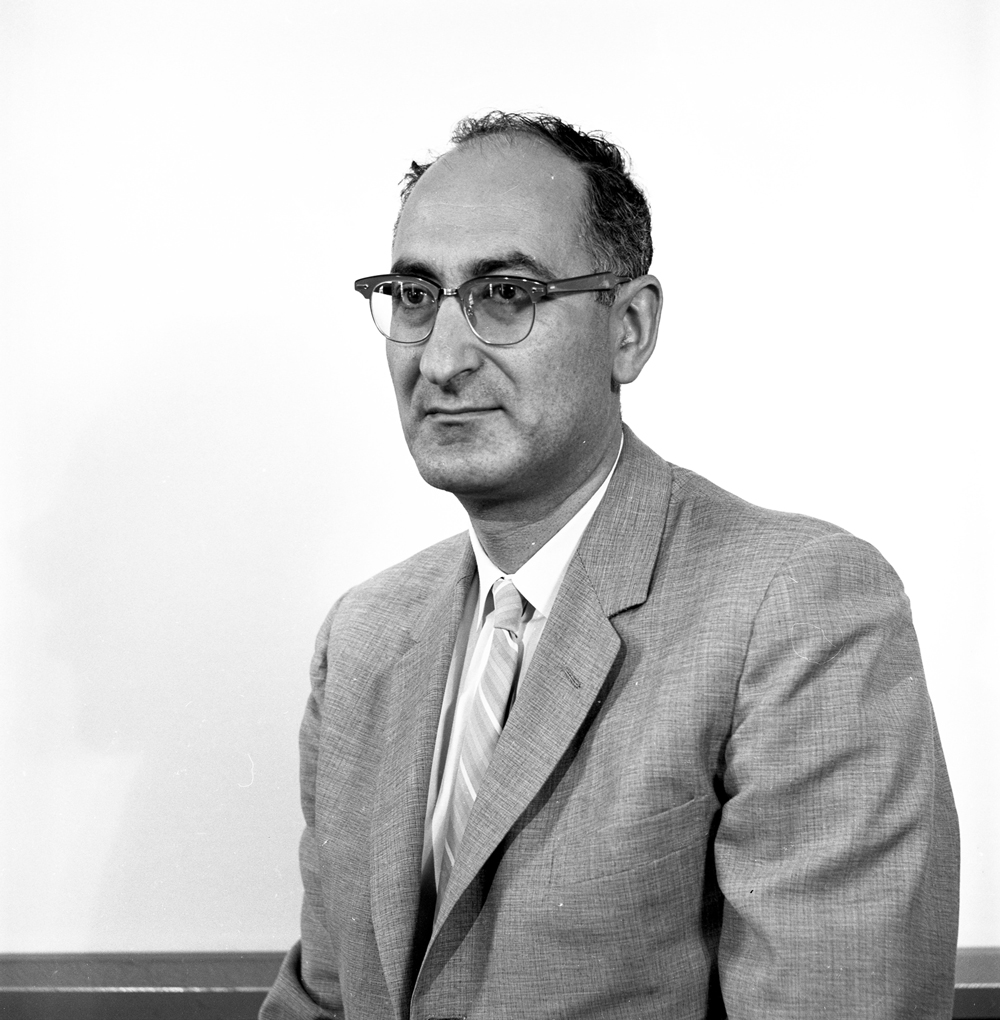
Donabedian publishes “Evaluating the Quality of Medical Care”
Avedis Donabedian’s landmark article “Evaluating the Quality of Medical Care” is published in the Milbank Quarterly, establishing the widely used structure-process-outcome framework. The papers were commissioned by NIH’s Health Services Research Study Section from carefully selected authors as a means of defining the scope, methods, and standards of the field.
1968
ISR Launches Panel Study of Income Dynamics
ISR launches the Panel Study of Income Dynamics (PSID), a national study of socioeconomic factors and health that has led to key inter-generational analyses and a more nuanced understanding of the dynamics of poverty.
1973
Future Directions in Health Services Research Conference
U-M hosts conference on “Future Directions in Health Services Research,” organized by the newly formed Health Services Research Group, a cross-campus organization of health services researchers.
1974
HSR group hosts second conference
The U-M HSR Group holds its second conference, which discussed developing a proposal for a health services research center.
1975
Monitoring the Future Study begins
The Monitoring the Future study, which annually surveys approximately 50,000 American young people on behaviors, attitudes, and values, begins under ISR.
1976
U-M establishes Health Services Research Center
U-M establishes the Health Services Research Center, located within the Office of the Vice President for Research, after receiving one of five original awards from the National Center for Health Services Research (a predecessor of the Agency for Healthcare Research & Quality). U-M’s center continued through 1979.
1984
Establishment of U-M Center for Nursing Research
The U-M Center for Nursing Research is established and nursing research becomes central to the mission of the School of Nursing.
1998
Michigan Comprehensive Hand Center for Innovation Research (M-CHOIR) established
M-CHOIR, the research arm of the U-M Comprehensive Hand and Upper Extremity Center, conducts a wide array of clinical and health services research.